

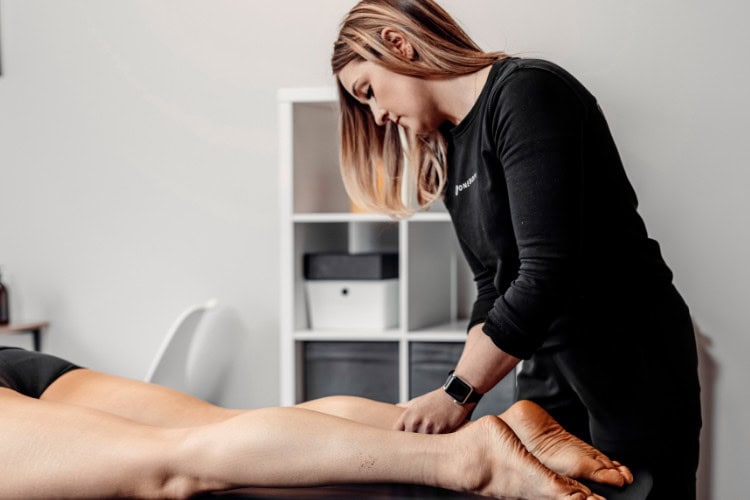

An achilles rupture usually announces itself in a single moment. A snap or pop at the back of the ankle, often loud enough to hear, with a sensation people describe the same way again and again: being kicked or struck from behind, turning to find nobody there. Achilles tendinopathy is the opposite story, a gradual ache that builds over weeks.
The two problems share one tendon and almost nothing else, and telling them apart matters urgently, because a rupture needs same-day assessment while tendinopathy needs a loading plan. One myth makes ruptures dangerous to miss: many people can still walk on a fully torn achilles. Walking proves nothing. The moment, the weakness, and the signs below prove much more, and when the story fits rupture, the rule is simple: same-day urgent care, no waiting to see.
Key Takeaways
- A sudden snap or pop at the back of the ankle, with a kicked-from-behind feeling, points to rupture.
- Walking does not rule out a rupture, because other muscles can compensate with a flat-footed gait.
- Rupture brings sudden weakness: pushing off, standing on tiptoes, and climbing stairs fail immediately.
- Tendinopathy builds gradually with morning stiffness and load-related ache, a different story entirely.
- A story that fits rupture means urgent care the same day, and timely assessment protects the outcome.
Achilles Rupture Warning Signs
Four signs define the rupture story, and the moment itself leads.
- The snap moment. A sudden pop or snap at the back of the ankle during push-off: sprinting for a bus, a jump in sport, a lunge. Many people hear it. Most describe being kicked or hit from behind.
- Immediate push-off failure. The calf’s connection to the heel is cut, so rising onto tiptoes on that leg fails, push-off vanishes, and stairs become a haul.
- A flat-footed walk that still works. Walking often remains possible, slow and flat, because other muscles compensate. Possible is not normal, and this is the sign that misleads.
- Swelling and sometimes a gap. The back of the ankle swells, bruises, and in some people a dent is felt in the tendon itself, most noticeable early before swelling fills it.
A sudden-moment story with push-off failure fits rupture until proven otherwise, whatever the walking looks like. The next step for that story sits two sections down, and the step is today.
Can You Walk On A Ruptured Achilles?
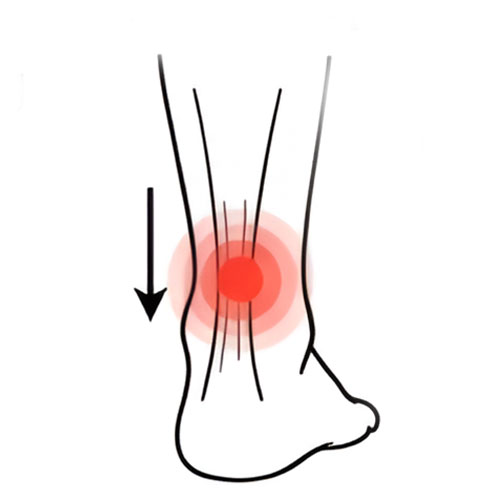
Yes, often, and walking is exactly why ruptures get missed.
The achilles connects the calf to the heel and powers push-off. Other muscles cross the ankle too, and together they can manage a flat, careful walk with the achilles fully torn. So the reasonable-sounding test, I can walk, so nothing serious has happened, fails precisely here, and a meaningful share of ruptures are picked up late for exactly this reason.
The test that does not fail is push-off: a single-leg heel raise on the injured side. Genuine rupture makes rising onto tiptoes on one leg close to impossible, immediately, not sore but impossible. A sudden-snap story plus a failed heel raise is a same-day story, walk or no walk.
Rupture Or Tendinopathy: Two Different Stories
Onset separates them: one arrives in a second, the other over weeks.
Tendinopathy is a gradual overload problem. The ache builds across weeks, the tendon is stiff with morning first steps, the pain warms up during activity and complains after, and push-off still works even when sore.
The full pattern, with home tests, sits in our guide to achilles tendinopathy symptoms and self-testing. Rupture is a structural event: one moment, immediate weakness, and a before-and-after the person can time to the second.
One honest overlap deserves naming: a tendon weakened by longstanding tendinopathy ruptures more easily, so a gradual ache that ends in a sudden pop has told both stories in order, and the pop takes priority. Gradual ache follows the tendinopathy pathway. Sudden moment follows the urgent one.
Why Clinicians Squeeze The Calf
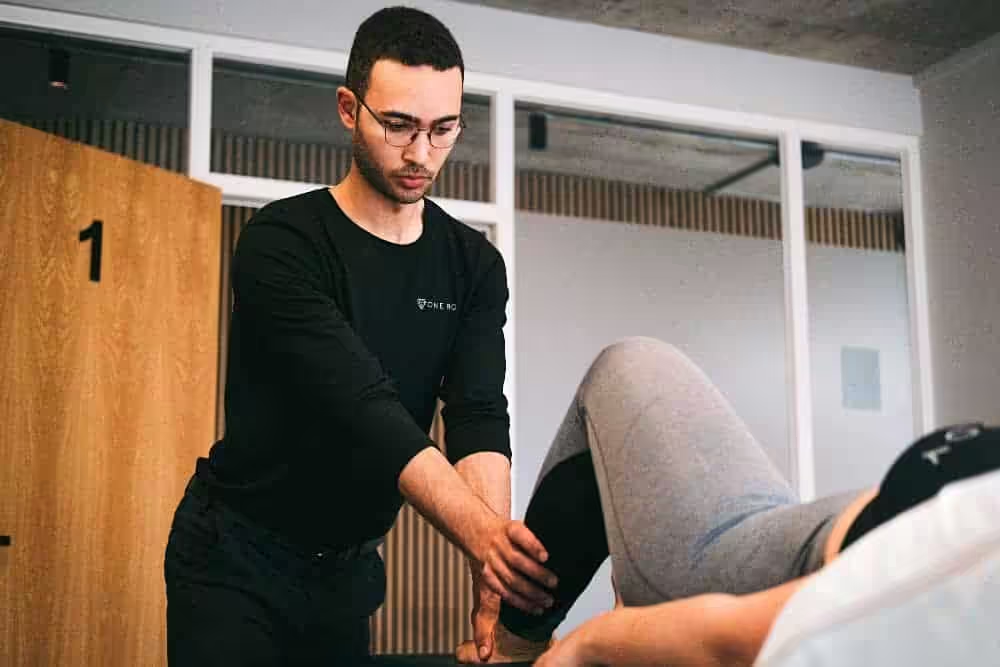
The calf-squeeze test checks whether the tendon still connects, and interpretation belongs in trained hands.
Assessment for suspected rupture includes a simple-looking test. You kneel or lie face down, feet hanging free, and the clinician squeezes the calf muscle. An intact achilles transmits the squeeze and the foot flicks downward. A ruptured one transmits nothing, and the foot stays still.
The logic is worth understanding because the test features in most rupture assessments, and the interpretation still belongs with the clinician: partial tears, swelling, and guarding can muddy the result, and imaging settles genuinely uncertain cases.
The practical point for you is one step earlier. A story fitting rupture earns that assessment the same day, and nothing about a home version of it changes the destination.
What To Do If You Suspect A Rupture
A suspected rupture is a same-day urgent care visit, and early assessment protects the result.
Go to urgent care or A&E today for a sudden snap with push-off failure. Meanwhile keep weight off the leg as much as practical and avoid stretching the ankle or testing it repeatedly, because a fresh tear treated promptly, whether managed surgically or non-surgically, does better than one assessed late.
Both management pathways produce good outcomes when started early, and the choice belongs with the assessing team. Everything short of the rupture story follows the ordinary route: gradual achilles or ankle pain that persists beyond two to three weeks books a standard assessment, and our ankle pain team in London sees those within days through direct access, no referral needed.
Note. A suspected achilles rupture needs urgent care the same day: a sudden snap with push-off failure, a failed single-leg heel raise, or a felt gap in the tendon all qualify, whether or not walking is possible. Seek urgent care too for a hot swollen tendon with fever, or a foot turning cold, pale, or numb.
Seek same-day review for calf swelling and tenderness without injury, since this can signal a clot rather than a tendon problem. Physiotherapists screen for all of these at first assessment and refer onward the same day when they appear. Contact NHS 111 when unsure.
Frequently Asked Questions
We answer the rupture questions patients ask most.
What does a ruptured achilles feel like?
A sudden snap or pop at the back of the ankle, classically felt as a kick or blow from behind, followed by immediate push-off weakness. Pain varies more than people expect, and some ruptures hurt surprisingly little after the first minutes. The weakness is the constant.
Can you still walk with a torn achilles?
Yes, many people manage a flat-footed walk because other muscles compensate, which is why ruptures get missed. Rising onto tiptoes on the injured leg is the honest check, and genuine rupture makes a single-leg heel raise close to impossible.
How do I know if it is achilles tendonitis or a tear?
Onset decides it: tendinopathy builds gradually with morning stiffness and load-related ache, while a rupture arrives in one sudden moment with immediate weakness. A gradual ache ending in a sudden pop counts as the sudden story. When the stories blur, assessment settles it.
References
- National Health Service. Achilles tendon rupture: symptoms and treatment.
- National Institute for Health and Care Excellence. Achilles tendinopathy and rupture: clinical knowledge summary.
- Chartered Society of Physiotherapy. Direct access to physiotherapy.
- Health and Care Professions Council. The register of physiotherapists.
