



Achilles problems follow a load pattern, and the pattern is the diagnosis’s biggest clue. Stiffness in the tendon on waking that eases as you move. Pain at the start of a run that warms up mid-session, then returns louder afterwards.
A tendon that punishes yesterday’s big day rather than today’s. Most people call it Achilles tendonitis, and modern practice says tendinopathy, because research shows the problem is a load-related change in the tendon rather than simple inflammation.
The name matters less than the pattern, so we put the pattern first, four home tests second, and the honest limits after that. One warning sits above everything: a sudden pop with loss of push-off is a different emergency entirely, covered in the escalation section below.
Our MCSP-registered team at One Body LDN assesses Achilles presentations weekly across our London clinics.
Key Takeaways
- Morning tendon stiffness that eases with movement is the hallmark Achilles tendinopathy sign.
- Pain that warms up during activity and returns worse afterwards completes the load pattern.
- Four home tests build the pattern picture in ten minutes.
- Two or more positive tests alongside the load pattern point strongly to Achilles tendinopathy.
- A sudden pop with loss of push-off is a rupture concern needing same-day medical assessment, not self-testing.
Achilles Tendinopathy Symptoms
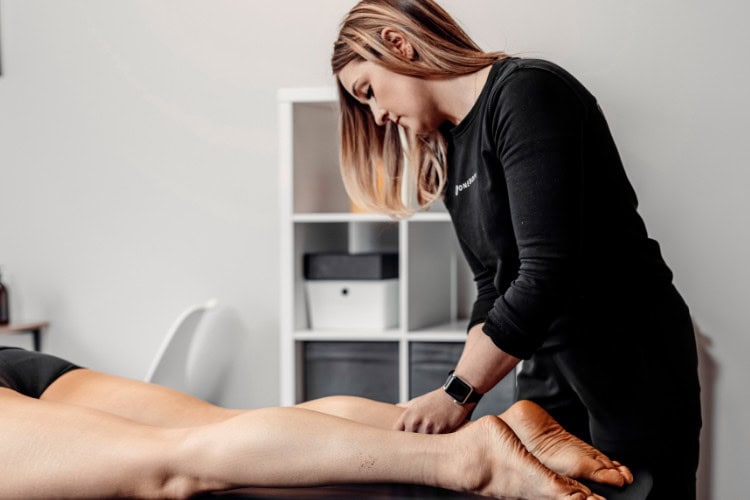
Five symptoms define the Achilles load pattern, and the morning one leads.
- Morning stiffness in the tendon. The back of the ankle feels stiff and sore on the first steps of the day, easing over minutes of movement.
- The warm-up deception. Pain at the start of activity that fades as you warm up, tempting you onward, then returns worse in the hours after.
- A precise, pinchable location. Tenderness on the tendon itself, most commonly a few centimetres above the heel bone, sometimes directly at the bone.
- Load-lag behaviour. The tendon reports yesterday’s overload today. Flare-ups follow training jumps, new hills, or harder surfaces by a day.
- A thicker or lumpier tendon. Compared side to side, the sore tendon may feel subtly thickened at the tender zone.
The first two carry the pattern. Location refines it: pain a few centimetres up the tendon and pain at the bone itself behave as related but distinct problems, which assessment separates.
The Four Home Tests
Four tests together build the pattern picture. Stop any test producing sharp, worsening pain.
Test 1: The Pinch Test
How to do it. Sit with the ankle relaxed. Gently pinch the tendon between thumb and finger, working from the heel bone upward a few centimetres.
Positive sign. A precise zone of familiar tenderness on the tendon, clearly sharper than the same spot on the other leg.
Test 2: The Morning Pattern Tracker
How to do it. Nothing to perform. Rate the tendon’s stiffness out of ten on your first ten steps tomorrow, and note how many minutes it takes to ease.
Positive sign. Repeatable first-steps stiffness or pain that eases with movement, day after day.
Test 3: The Double Then Single Heel Raise
How to do it. Stand near a wall. Rise onto the balls of both feet and lower slowly, five times. If comfortable, repeat five times on the sore leg alone.
Positive sign. Pain reproduced in the tendon during raises, an inability to match the other side’s height or count, or pain that arrives on the single-leg version specifically.
Test 4: The Load-Lag Diary
How to do it. Note your last three flare-ups against the previous day’s activity.
Positive sign. Flares reliably following bigger-than-usual load days by roughly a day. The lag is the tendon’s signature.
Reading Your Results
Two or more positive tests, with the load pattern, point strongly to Achilles tendinopathy.
One positive alone is weak evidence. Two or more, sitting alongside morning stiffness and the warm-up deception, make tendinopathy the leading explanation and an assessment the sensible next step.
Zero positives with ongoing back-of-ankle pain still deserves assessment, because the region has neighbours: pain behind the heel bone, pain under the heel, and calf-muscle pain each behave differently, and separating pain at the back of the heel from pain underneath it is its own guide, coming later in this series.
Recovery timescales vary with severity and staging, and our guide on how long ankle problems take to heal with physiotherapy covers the honest ranges.
What The Self-Test Cannot Tell You

Home testing classifies the pattern. It cannot grade the tendon or stage the plan.
The tests cannot measure how irritable the tendon is, cannot separate the tendon’s two problem zones reliably, cannot assess the calf strength and ankle stiffness that drove the overload, and cannot rule out the rarer neighbours. Assessment adds those layers, and staging matters more for the Achilles than almost any tendon, because the right load at the wrong stage flares it.
Persistent ankle pain behind the joint deserves the fuller look. Our achilles team in London runs exactly this assessment, typically within days through direct access, no referral needed.
The Escalation Line: Rupture Signs
A sudden pop with loss of push-off is not tendinopathy, and it cannot wait.
Achilles rupture announces itself differently: a sudden snap or pop, often with the feeling of being kicked or struck from behind, followed by weak or absent push-off. The trap is that a ruptured tendon can hurt surprisingly little after the first moments, which persuades people to wait. Do not wait.
Same-day urgent care assessment protects the repair options. The full warning-signs guide is coming later in this series, and the rule stands alone: pop plus push-off loss equals same-day assessment, every time.
When To Book The Assessment
Three triggers turn a positive self-test into a booking.
Duration: tendon symptoms persisting beyond three weeks despite sensible load management. Function: morning stiffness or pain now changing how you walk, train, or take stairs. Recurrence: a tendon that flares with every return to activity, cycling through rest and relapse.
If any trigger is met, book the assessment, because tendinopathy responds best to staged, guided loading started early. Our ankle physiotherapy team in London holds same-week slots for new tendon presentations.
Note. Some Achilles and ankle symptoms need urgent care rather than self-testing. Seek same-day urgent assessment for a sudden pop or snap in the tendon with weak or absent push-off, even if pain fades quickly. Seek urgent GP or A&E care for a hot swollen tendon or ankle with fever, an injury you cannot weight-bear through, or a foot turning cold, pale, or numb.
Seek GP review for tendon pain with unexplained weight loss or pain unrelated to load. Physiotherapists screen for every one of these at first assessment and refer onward the same day when they appear. Contact NHS 111 when unsure.
Frequently Asked Questions
We answer the Achilles questions patients ask most.
What does Achilles tendinopathy feel like?
Morning stiffness in the tendon that eases with movement, plus pain that warms up during activity and returns worse afterwards. Tenderness concentrates on the tendon itself, most often a few centimetres above the heel bone.
Is it tendonitis or tendinopathy?
Tendinopathy is the current clinical term, because research shows load-related change in the tendon rather than simple inflammation. The name changes nothing about your next step. The load pattern and the tests above do the recognising.
Should I rest an Achilles problem completely?
No, complete rest typically stiffens and weakens the tendon further. Tendons recover through staged loading matched to their irritability, which is exactly what an assessment sets up. Reduce the loads that flare it while you arrange one.
References
- National Health Service. Achilles tendinopathy: symptoms and treatment.
- National Institute for Health and Care Excellence. Achilles tendinopathy: clinical knowledge summary.
- Chartered Society of Physiotherapy. Direct access to physiotherapy.
- Health and Care Professions Council. The register of physiotherapists.
