



Most wrist pain settles within a couple of weeks with sensible activity change. Two situations skip that timeline entirely. Numbness or tingling in the fingers, and a wrist injured in a fall, both deserve a prompter look than ordinary wrist ache.
Outside those two overrides, three everyday signals decide when to book: how long the pain has lasted, how much it limits you, and how often it returns. We put the overrides first, because with the wrist, getting the category right matters more than the general rule.
Our MCSP-registered team at One Body LDN assesses wrist pain daily across our London clinics, and sorting numbness from mechanical pain is often the first useful thing an assessment does.
Key Takeaways
- Numbness or tingling in the fingers warrants assessment sooner than ordinary wrist pain would.
- A wrist injured in a fall needs an assessment promptly, to rule out a fracture.
- Otherwise, wrist pain lasting beyond two to three weeks despite sensible self-care warrants assessment.
- Pain that limits grip or keeps returning also crosses the threshold.
- Direct access applies. No GP referral is needed to book a wrist assessment.
The Two Overrides
Numbness and a recent fall both bypass the usual waiting period.
Override 1: Numbness Or Tingling
Numbness, tingling, or a sense of pins and needles in the fingers, especially at night, suggests a nerve is involved rather than a muscle or joint alone. This pattern benefits from earlier assessment than plain wrist ache, because nerve symptoms are more comfortable to manage the sooner they are addressed.
Override 2: A Recent Fall
A wrist that hurts after a fall onto an outstretched hand needs assessment promptly, to check for a fracture that is not always obvious from swelling or bruising alone. Tenderness specifically at the base of the thumb after a fall is a particular one to take seriously, since a small fracture there is easily missed. This does not wait for the two-to-three-week rule below.
The Three Signals For Everyday Wrist Pain
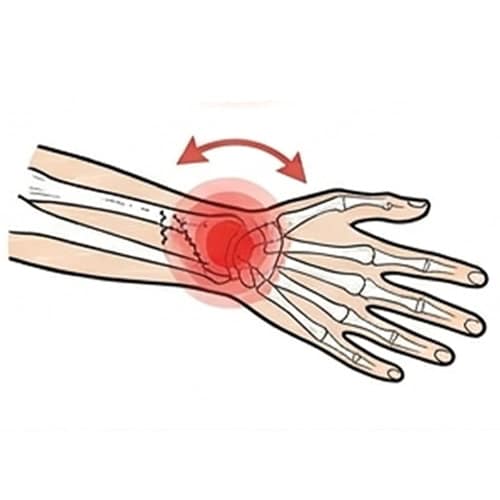
Outside the two overrides, any one of these thresholds is enough on its own.
Duration: wrist pain still present after two to three weeks of sensible self-care has declared itself. Severity: pain limiting grip, typing, or lifting needs assessment sooner, because compensating elsewhere spreads the problem. Recurrence: wrist pain that clears then returns points to an unresolved driver, often related to repetitive load, worth identifying properly.
Why Getting The Category Right Matters
Mechanical wrist pain and nerve-related wrist pain need different responses, and mixing them up wastes time.
Simple mechanical wrist pain, from a strain or overuse, generally rewards the everyday thresholds above. Nerve-related pain behaves differently and rewards earlier attention regardless of duration. Treating numbness as “just wrist pain” and waiting the standard two to three weeks means missing the window where earlier action helps most.
This is why the two overrides sit above the everyday signals in this guide. Knowing how to choose the right wrist physio matters here too, since a clinician experienced with nerve-related wrist problems will ask the right questions from the first call.
What Happens When You Book

A wrist assessment sorts the source before building the plan.
Your physiotherapist takes the history, examines wrist movement and the specific structures involved, tests nerve function if numbness is part of the picture, and reaches a working diagnosis.
From there you get a plan matched to the actual source, mechanical or nerve-related. Our wrist pain team in London assesses new presentations within days through direct access, no referral needed.
Note. Some wrist symptoms need urgent medical care rather than a physiotherapy booking. Seek urgent care for a wrist with visible deformity, inability to move it after a fall, or tenderness over the base of the thumb after a fall. Seek urgent medical advice for numbness or weakness that is rapidly worsening, or a hot swollen wrist with fever. Physiotherapists screen for these at first assessment and refer onward the same day when they appear. Contact NHS 111 when unsure.
Frequently Asked Questions
We answer the timing questions wrist pain patients ask most.
My wrist pain comes with numbness. Should I wait the usual two to three weeks?
No, numbness or tingling warrants a prompter assessment than ordinary wrist pain. Nerve symptoms are more comfortable to manage the earlier they are addressed. Mention the numbness specifically when you book.
I fell on my wrist and it hurts. Do I need to see someone straight away?
Yes, a wrist injured in a fall should be assessed promptly to rule out a fracture. Tenderness at the base of the thumb is a particular one to take seriously, since a small fracture there can be easily missed. This does not wait for the usual timing rule.
Do I need a referral to see a physio for wrist pain?
No, private physiotherapy runs on direct access, so you book the assessment yourself. Insurance-funded care sometimes needs pre-authorisation from your insurer first. Self-pay patients book directly.
References
- National Health Service. Wrist pain: causes and when to get help.
- National Institute for Health and Care Excellence. Carpal tunnel syndrome: assessment guidance.
- Chartered Society of Physiotherapy. Direct access to physiotherapy.
- Health and Care Professions Council. The register of physiotherapists.
