



A sprain and a fracture can look identical in the first hours. Both swell, both bruise, both hurt to walk on. Clinicians separate them with a short screen so reliable it decides who gets an X-ray, and it translates well into plain language. Two things are checked: where exactly it hurts, and whether you can take four steps. We set out that screen first.
One rule sits above everything: when the screen points toward fracture, or you are in doubt, get an X-ray. This guide helps you understand the decision, not avoid it. Our MCSP-registered team at One Body LDN screens fresh ankle injuries across our London clinics every week.
Key Takeaways
- Bone tenderness and inability to take four steps are the two signs that point toward a fracture.
- Soft tissue tenderness below and in front of the ankle bones points toward a sprain.
- Being able to walk, even with a limp, points away from a fracture.
- Severe pain does not reliably mean broken, and moderate pain does not reliably mean sprained.
- When the signs point to fracture, or you are unsure, urgent care and an X-ray come first.
Can You Walk On A Broken Ankle? The Four-Step Test

Taking four steps points away from fracture, and failing them points toward one.
The first check is weight-bearing. Try to transfer weight onto the injured ankle and take four steps on a firm surface. Limping counts. Managing four steps, both immediately after the injury and now, points away from a significant fracture.
Being unable to take four steps, at either time, points toward one and means urgent assessment. The test works because most meaningful ankle fractures make weight-bearing close to impossible, while most sprains, even nasty ones, allow a guarded hobble.
It is a screen, not a verdict. Some fractures still allow walking, which is why the second check matters just as much.
Where It Hurts: The Bone Tenderness Check
Tenderness on the bone points toward a fracture. Tenderness on the soft tissue points toward a sprain.
Press gently and note where the sharp tenderness lives. The fracture-signal spots are on the bones themselves: the back edge and tip of the outer ankle bone, the back edge and tip of the inner ankle bone, and two midfoot spots, the bony bump on the outer edge of the midfoot and the top of the inner midfoot arch.
Sharp tenderness on any of these points toward fracture and toward an X-ray. The sprain-signal zone is different: the soft hollow just below and in front of the outer ankle bone, where the ligaments live.
Tenderness there, with the bones themselves quiet, points toward a sprain. This location logic is the heart of the screen clinicians use.
The Ottawa Ankle Rules, Translated
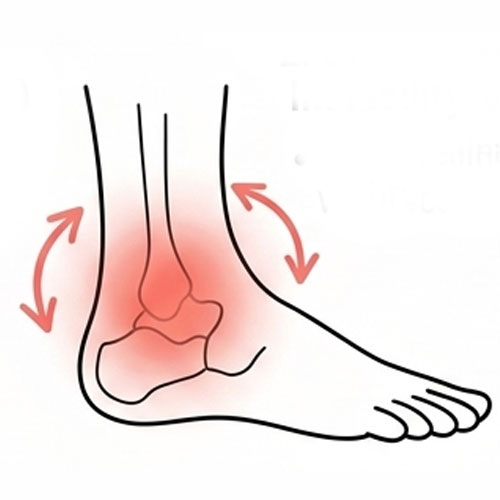
The two checks above are the Ottawa ankle rules, the screen that decides who needs an X-ray.
Emergency departments worldwide use the Ottawa ankle rules to decide imaging. The rules say an X-ray is needed when there is bone tenderness at the points above, or when four steps are impossible.
Their strength is catching fractures: an ankle that passes both checks is very unlikely to have a significant break. Their limit is precision, because failing the screen does not confirm a fracture; it confirms the need for a picture.
That is the spirit to take from this guide. Passing both checks supports treating the injury as a sprain, starting with the first 72-hour protocol. Failing either sends you for the X-ray, and nothing in this guide argues otherwise.
What Happens After The Screen
Pass the screen, and the sprain pathway begins. Fail it and imaging comes first.
An ankle that passes both checks is treated as a sprain: early protection, then progressive rehabilitation, with severity read through our guide to sprained ankle grades. An ankle that fails either check goes to urgent care, where the X-ray decision takes minutes.
A confirmed fracture follows its own pathway, and physiotherapy picks up the rehabilitation once the bone is managed, often within weeks. An excluded fracture returns you to the sprain pathway with certainty, which is itself valuable.
Either way, the ankle ends up on the right track, and our sprained ankle team in London assesses the post-screen injury within days through direct access, no referral needed.
Note. This guide explains the screen clinicians use. It does not replace assessment when signs are present. Go to urgent care or A&E for an ankle that cannot take four steps, tenderness directly on the ankle bones or midfoot points, visible deformity, a foot turning cold, pale, or numb, or severe pain that is worsening.
Seek same-day medical review for calf swelling and tenderness in the days after injury, since reduced movement raises clot risk. Physiotherapists screen for all of these at assessment and refer onward the same day when they appear. Contact NHS 111 when unsure.
Frequently Asked Questions
We answer the sprain-or-fracture questions patients ask most.
Can you walk on a broken ankle?
Usually not, and the inability to take four steps is one of the two main fracture signals. Some fractures still allow walking, which is why bone tenderness is checked alongside them. Walking comfortably with soft tissue tenderness only points toward a sprain.
How do doctors tell a sprained ankle from a broken one?
They use the Ottawa ankle rules: checking for tenderness on specific bone points and whether you can take four steps. Either sign triggers an X-ray. Passing both makes a significant fracture very unlikely, so the injury is treated as a sprain.
Do I need an X-ray for my ankle injury?
Only when the screen points that way: bone tenderness at the key points, inability to take four steps, or visible deformity. Most sprains need no imaging. When either signal is present, or you are in doubt, urgent care makes the call in minutes.
References
- National Institute for Health and Care Excellence. Ankle injury assessment: Ottawa ankle rules guidance.
- National Health Service. Broken ankle: symptoms and treatment.
- Chartered Society of Physiotherapy. Direct access to physiotherapy.
- Health and Care Professions Council. The register of physiotherapists.
