



Sciatica and lower back pain often appear together, but the two are distinct conditions. Lower back pain stays in the lumbar region. Sciatica radiates from the lower back down one leg, often with numbness or tingling. Five clear markers help you tell which one you have. Both respond to physiotherapy as first-line treatment, and the right plan depends on which condition is driving your symptoms.
Key Takeaways
- Lower back pain stays in the lumbar region; sciatica radiates down one leg
- The knee rule is the fastest self-check; sciatica passes the knee, back pain rarely does
- Sciatica involves nerve symptoms; back pain rarely does
- Many people have both conditions at the same time
- NICE NG59 recommends physiotherapy as first-line treatment for both
Lower Back Pain and Sciatica Share a Region but Follow Different Rules
Around 8 in 10 adults experience lower back pain at some point, and around 4 in 10 of those develop sciatica. The two conditions share the same anatomical region, but the rules that govern each are different. Knowing which one you have changes the right treatment, the recovery expectation, and how urgent the care needs to be.
Lower back pain stays local. Pain sits in the lumbar area, around the pant line, and rarely passes the knee.
Sciatica radiates. Pain begins in the lower back or buttock and travels down the back of one leg, often into the calf or foot.
The two can occur together. Our full sciatica guide covers the condition in depth.
Five Markers Help You Tell Which One You Have
The differential comes down to five clear markers. Each marker on its own is suggestive. Three or more pointing the same way is a strong signal.
Marker 1: Location and the knee rule
Lower back pain stays above the knee. Sciatica passes the knee in most cases, often reaching the calf, ankle, or foot. Pain that travels below the knee is the strongest single indicator of sciatica. Back pain on its own, with no leg involvement at all, is not sciatica.
Marker 2: Pain quality
Lower back pain feels dull, achy, stiff, or sharp on movement. Sciatica feels sharp, burning, or electric-shock in character. The quality of nerve pain is distinct from muscle or joint pain, and most people can tell the difference once they pay attention.
Marker 3: One side or both
Sciatica almost always affects one side of the body. Lower back pain often runs across both sides of the lumbar region. Bilateral leg symptoms suggest something else is happening and need urgent assessment.
Marker 4: Nerve symptoms
Sciatica brings numbness, tingling (pins and needles), or muscle weakness alongside the pain. People often ask if their pain is nerve-related or muscle-related. Lower back pain is mechanical and rarely produces nerve symptoms.
Marker 5: What provokes the pain
Lower back pain typically worsens with bending, lifting, twisting, or sudden movement. Sciatica typically worsens with prolonged sitting, coughing, sneezing, or straining. Our guide on the four mechanical causes of lower back pain covers the back pain side in detail.
Many People Have Both at the Same Time
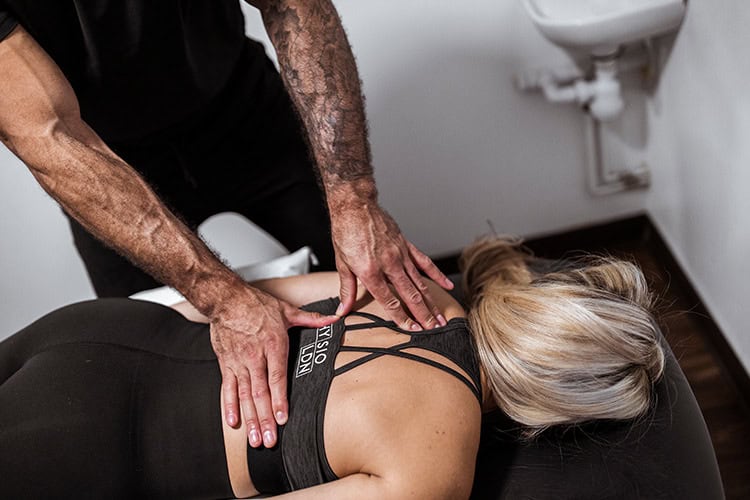
The two conditions often appear together because they can share a single cause. A herniated lumbar disc, for example, can produce mechanical lower back pain and sciatic nerve compression at the same time.
The pattern looks like constant back pain plus leg pain that comes and goes. The treatment plan addresses both layers: manual therapy and movement for the mechanical pain, and graded loading for the nerve recovery. We identify the overlap during examination by testing for both mechanical movement provocations and nerve root irritation signs. Our guide on bending and lifting back pain covers the disc mechanism.
Conditions That Get Mistaken for Sciatica
Not every leg pain that starts in the back is sciatica. Five conditions commonly mimic the pattern.
Sacroiliac joint dysfunction. Pain over the sacroiliac joint refers to the buttock and back of the thigh. The pain rarely passes the knee and worsens with single-leg standing.
Hip osteoarthritis. Hip joint pain refers to the groin, front of the thigh, and sometimes the buttock. Movement of the hip reproduces the pain, not movement of the lower back.
Vascular claudication. Reduced blood flow in the legs causes cramping pain on walking that eases with rest. The pattern is bilateral and tied to exertion.
Peripheral neuropathy. Nerve damage from diabetes or other causes produces bilateral foot numbness without back involvement.
Greater trochanteric pain syndrome. Pain over the outside of the hip sometimes refers into the upper thigh. The pattern reproduces with side-lying or single-leg loading, not with lumbar movement.
When to Seek Professional Assessment
Same-day urgent attention applies when red flags appear. Symptoms that need A&E include:
- Loss of bladder or bowel control
- Numbness around the saddle area
- Bilateral leg weakness or numbness
- Severe pain after a traumatic injury
Symptoms that last more than six weeks or get worse need a physiotherapist or GP assessment. Our guide on back pain warning signs and when to see a physio covers the full decision framework.
Treatment Starts with Physiotherapy for Both Conditions
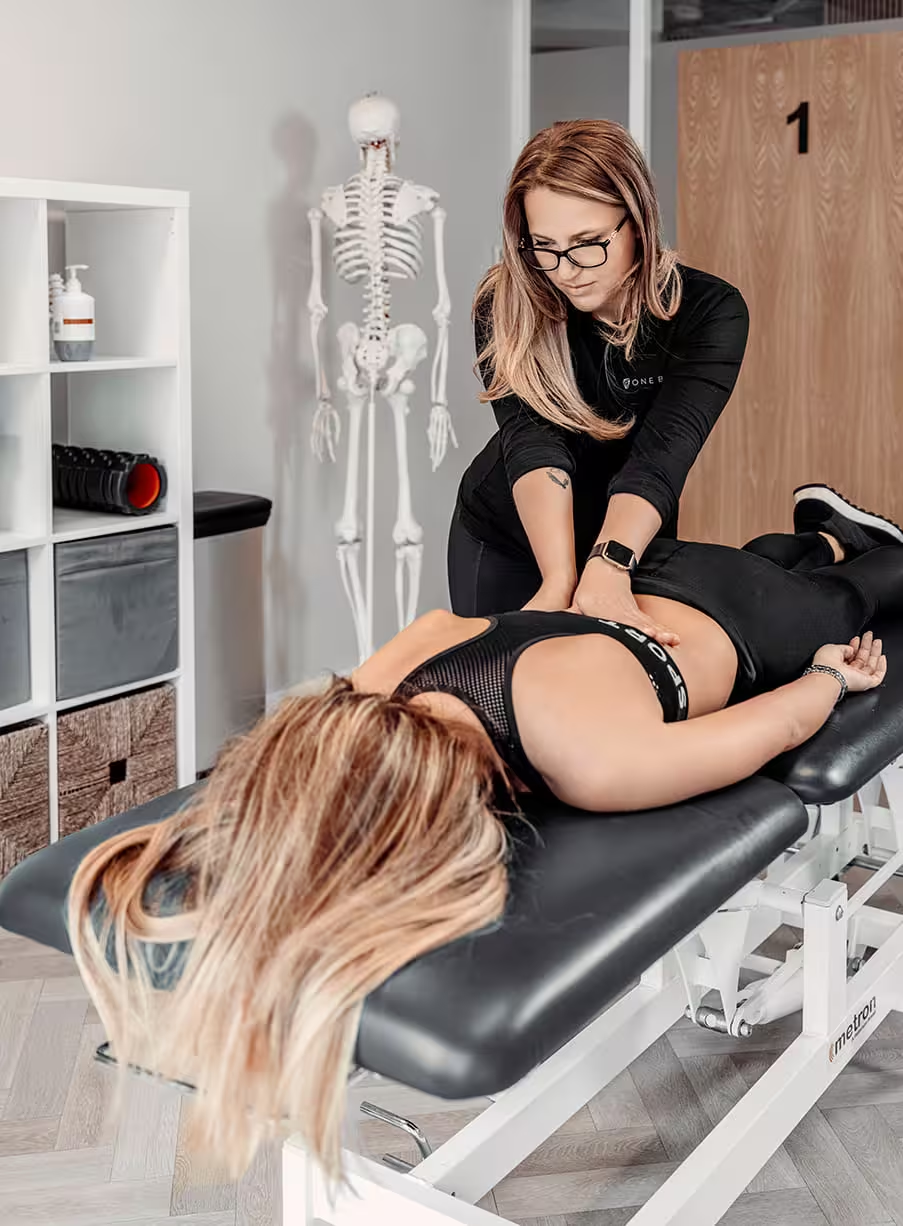
NICE clinical guideline NG59 recommends physiotherapy as the first-line treatment for both lower back pain and sciatica in the UK. Most cases of either condition settle within six weeks with conservative care.
The treatment plan differs in detail. Lower back pain rehabilitation focuses on movement, manual therapy, and core strength. Sciatica rehabilitation adds nerve-specific exercises and graded loading to support nerve recovery. Manual therapy, exercise prescription, and movement re-education form the core of both plans, with the specific exercises matched to the diagnosis.
Our sciatica physiotherapy in London service offers same-day assessments for cases that need quick attention, with a treatment plan matched to your specific diagnosis.
Sciatica and Back Pain Treatment at One Body LDN
One Body LDN runs registered physiotherapy clinics throughout London. Our team handles both sciatica and lower back pain cases with same-day assessments, neurological examination, and a treatment plan built around your specific symptom pattern. We use the five-marker framework above to identify the cause from the first session, and the right plan follows from there.
Frequently Asked Questions
How do I know if I have sciatica or lower back pain?
Pain that radiates from your lower back down one leg, especially past the knee, points to sciatica. Pain that stays in the lumbar region without leg involvement is lower back pain.
What often gets mistaken for sciatica?
Sacroiliac joint dysfunction, hip osteoarthritis, vascular claudication, and peripheral neuropathy can all mimic sciatica. A physiotherapist can run the differential through history and physical examination.
Does sciatica cause lower back pain?
Sciatica can include lower back pain, especially when a disc is involved. Many people experience both layers at once because the same disc compression produces mechanical back pain and nerve symptoms together.
Can sciatica cause lower back pain on both sides?
Sciatica almost always affects one side. Bilateral symptoms suggest central nerve compression and need urgent A&E assessment.
References
- NICE NG59: Low back pain and sciatica in over 16s. https://www.nice.org.uk/guidance/ng59
- University Hospitals: Low Back Pain vs. Sciatica. https://www.uhhospitals.org/blog/articles/2024/04/low-back-pain-vs-sciatica
- Whittington Hospital: Low Back Pain and Sciatica. https://www.whittington.nhs.uk/
