



You are months past ACL reconstruction, the knee feels strong in the gym, and the season is starting. The question of when to go back is answered by tests, not by how the knee feels, because a reconstructed knee that feels normal in daily life often still carries a quadriceps deficit and a landing pattern that re-tear an ACL on the pitch.
Athletes who return to pivoting sport before nine months, or without passing a return-to-sport test battery, re-injure the same knee or the other one at several times the rate of those who wait and pass. This guide sets out when a return to sport after ACL reconstruction is considered, the criteria the knee has to meet, the tests used, how the graft type changes the picture, how the return itself is staged and what goes wrong when it is rushed.
Key takeaways
- Return to pivoting sport after ACL reconstruction is cleared at nine months or later, and only after passing strength, hop and movement-quality tests.
- The criteria are quadriceps and hamstring strength at 90 per cent or more of the other leg, hop tests at 90 per cent or more, controlled landing and cutting on video, and a psychological readiness score that says you trust the knee.
- A 2016 study found that athletes who failed the discharge criteria re-injured at about four times the rate of those who passed, and each month of delay up to nine months roughly halved the risk.
- Hamstring grafts leave a hamstring strength deficit and patellar tendon grafts leave a quadriceps deficit and kneecap pain, so the testing targets the donor site.
- The return is staged through non-contact training, full training and then competition, with strength and neuromuscular work continuing for at least the first season back.
When is a return to sport after ACL reconstruction considered?
A return to pivoting sport after ACL reconstruction is considered at nine months after surgery at the earliest, and is cleared only when the knee passes a battery of strength, hop and movement tests. Time and tests are both required; neither one alone is enough.
Why nine months. The graft remodels for a year or more and is at its weakest between the second and sixth month. The 2016 Delaware-Oslo study found that for every month a return was delayed up to nine months, the re-injury rate fell by 51 per cent. A 2020 Swedish study of young athletes found those who returned before nine months re-injured at about seven times the rate of those who waited.
Why tests. Nine months on a weak quadriceps is not safer than six months on a strong one. The same 2016 research found that athletes who returned without meeting the discharge criteria re-injured at about four times the rate of those who met them.
Sport matters. Straight-line running and cycling return earlier, at three to six months when their own criteria are met. Football, rugby, netball, basketball, skiing and racket sports are the pivoting sports that the nine-month rule and the full test battery apply to.
What criteria does the knee have to meet?
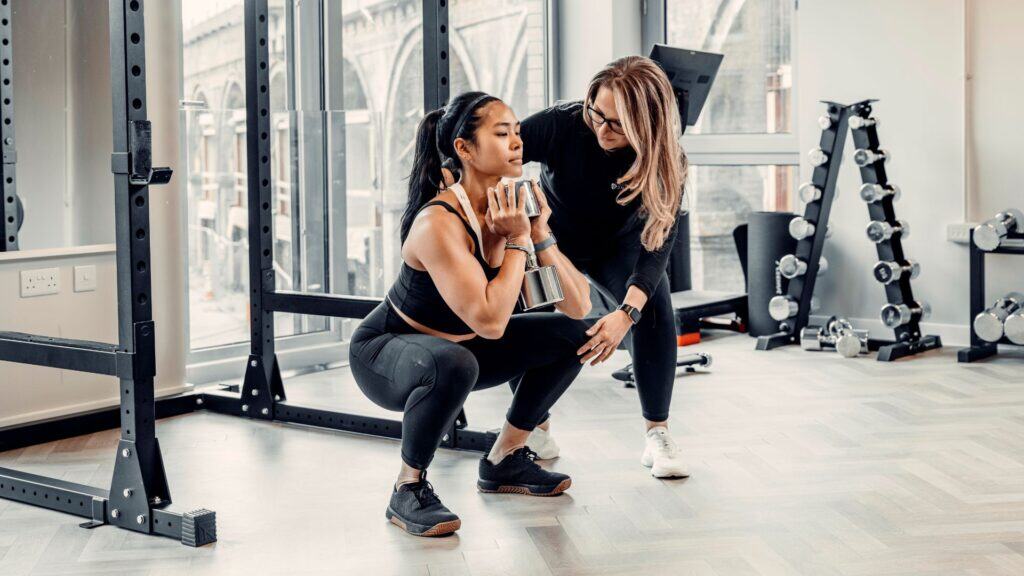
The knee has to show strength within 90 per cent of the other leg, hop performance within 90 per cent, good landing and cutting quality, a quiet joint and a readiness score that says you trust it, before a return to sport is cleared.
| Criterion | What is measured | Threshold |
| Quadriceps strength | Isokinetic or handheld dynamometer, compared with the other leg | 90 per cent or more |
| Hamstring strength | Dynamometer, and hamstring to quadriceps ratio | 90 per cent or more; ratio above about 0.6 |
| Hop tests | Single hop, triple hop, crossover hop, six-metre timed hop | 90 per cent or more of the other leg on each |
| Movement quality | Single-leg squat, drop landing, cutting, on video | No knee drift inwards, no stiff landing, symmetrical control |
| Joint status | Swelling, range, stability | Quiet knee, full range, no giving way |
| Psychological readiness | ACL-RSI questionnaire | Score in the range associated with successful return, usually above 65 |
| Time | Months since surgery | Nine or more for pivoting sport |
The one most often failed. Quadriceps strength. A knee that passes the hop tests on the strength of a good calf and a good hip can still carry a 20 per cent quadriceps deficit, which is why strength is measured on its own and not inferred from hopping.
How is return-to-sport testing done?
Return-to-sport testing is a single session of two to three hours, or a set of shorter sessions, in which strength is measured with a dynamometer, hops are measured against the other leg, and landing and cutting are filmed and scored. The results are written down and compared with the previous test, because the trend matters as much as the number.
Strength testing. Quadriceps and hamstring strength are measured on both legs, seated, with the knee at set angles. The result is given as a percentage of the uninjured leg. A handheld dynamometer is accurate enough in clinic; isokinetic testing is used where available.
Hop testing. Four hop tests are performed on each leg in a set order, with the best of three recorded. A limb symmetry index below 90 per cent on any one test fails the battery. The timed hop and the crossover hop are the two most likely to show a deficit the single hop hides.
Movement quality. A drop from a box onto one leg, a single-leg squat and a planned and unplanned cut are filmed from the front and the side. The physiotherapist scores knee drift, trunk lean, landing stiffness and the use of the hip. A knee that passes the numbers and fails the video is not cleared.
Readiness. The ACL-RSI asks twelve questions about confidence, emotion and risk appraisal. A low score predicts a return that does not happen or does not last, and it is addressed with graded exposure rather than ignored.
How does the graft type change the return?
Hamstring tendon grafts leave a hamstring strength deficit and patellar tendon grafts leave a quadriceps deficit and kneecap pain, so the testing and the final phase of rehabilitation target the structure the graft was taken from. Quadriceps tendon grafts, used more often since 2020, sit between the two.
Hamstring graft. The semitendinosus and often the gracilis are harvested from the back of the thigh. Hamstring strength, in particular at deep knee bend, lags for a year or more. Sprinting, deceleration and the hamstring to quadriceps ratio are tested with care, and heavy hamstring loading continues after the return.
Patellar tendon graft. The middle third of the patellar tendon with bone at each end is harvested from the front of the knee. Kneecap pain in kneeling and a quadriceps deficit are the usual residuals, and quadriceps strength is the gate that takes longest to pass.
Quadriceps tendon graft. A strip of the quadriceps tendon above the kneecap is harvested. The quadriceps deficit is early and marked, then recovers, and kneecap pain is less common than with a patellar tendon graft.
What this means for you. Ask which graft you have and expect the testing to spend longest on that structure. Our ACL injury physiotherapy in London page explains how we tailor the final phase to the graft.
How is the return to sport staged?
The return to sport is staged over four to twelve weeks from non-contact training through full training to competition, with playing time built up across matches rather than restored in one. Clearance to return is clearance to begin the staging, not to play a full match.
Stage 1: non-contact training. Sport-specific drills, team shapes and conditioning without an opponent, two to three weeks. Strength sessions continue twice a week.
Stage 2: full training. Contact, unplanned cutting and reactive decision-making against team-mates, two to four weeks. The knee is checked for swelling after each session.
Stage 3: competition. A partial match first, with minutes added across the following games. A knee that swells or feels unstable after a match steps back one stage rather than pressing on.
After the return. Strength, landing and neuromuscular training continue twice a week for at least the first season. Re-injury risk to the reconstructed knee and to the other knee remains raised for two years, and the other knee is the one re-injured more often in young athletes.
What goes wrong when the return is rushed?
Returning by the calendar, passing the hops while failing the strength test, skipping the video, and stopping strength work at the point of return are the four errors behind most second ACL injuries.
The calendar. Nine months is the floor, not the target. A knee that is not ready at nine months is not made ready by the date.
The hidden quadriceps deficit. Hop tests can be passed on hip and calf strength. A quadriceps at 75 per cent fails under fatigue in the last twenty minutes of a match, which is when most re-injuries happen.
The unfilmed landing. A knee that drifts inwards on landing is the knee that tears again, and the drift is invisible without video.
Stopping at the return. Strength and neuromuscular work that stops on the day of return leaves the knee less protected in the second season than the first.
When to book return-to-sport testing
Return-to-sport testing is booked from about eight months after ACL reconstruction, or earlier where straight-line running and gym sport are the goal, and a repeat test is booked whenever the first is failed. A knee that has never had its strength measured against the other leg is tested before any return, whatever the month. Our knee pain physiotherapy service in London runs return-to-sport testing across all our clinics, with strength, hop and video assessment in one session, and no GP referral is needed.
Note. Some symptoms in the months after ACL surgery need urgent medical care rather than a testing session. A knee that suddenly swells and will not bend, a new episode of giving way with a pop, a hot, red knee with fever, or calf pain and swelling with or without shortness of breath are reasons to call NHS 111, contact the surgical team, or go to A&E.
Common questions about returning to sport after ACL reconstruction
How long after ACL surgery can I play sport again?
Nine months after surgery at the earliest for sports that involve pivoting, and only after passing return-to-sport tests. Running and gym training return earlier, at three to six months, when their own criteria are met.
What tests do I need to pass to return to sport after ACL reconstruction?
Quadriceps and hamstring strength at 90 per cent or more of the other leg, four hop tests at 90 per cent or more, controlled landing and cutting on video, a quiet knee with full range, and a psychological readiness score that shows you trust the knee.
What is the risk of re-tearing an ACL after returning to sport?
Re-injury to either knee affects roughly one in five young athletes who return to pivoting sport, and the rate is several times higher in those who return before nine months or without passing testing. Continued strength and neuromuscular training after the return lowers the risk.
Can I return to sport without passing the tests if I feel ready?
Feeling ready is one of the criteria, not a substitute for the others. Athletes who returned without meeting the discharge criteria re-injured at about four times the rate of those who met them in the 2016 Delaware-Oslo study.
Does the type of graft affect when I can return?
The timeline is the same, but the weakest structure differs. A hamstring graft leaves hamstring weakness and a patellar tendon graft leaves quadriceps weakness and kneecap pain, so the final phase and the testing concentrate on the donor site.
Book your London return-to-sport test
A return to sport after ACL reconstruction is cleared by what the knee can do under test, not by the date. You can book an assessment for knee pain physiotherapy in London at any of our clinics in 60 seconds, with no GP referral needed.
References
- Grindem H, Snyder-Mackler L, Moksnes H, Engebretsen L, Risberg MA. Simple decision rules can reduce reinjury risk by 84% after ACL reconstruction: the Delaware-Oslo ACL cohort study. British Journal of Sports Medicine.
- Kyritsis P, Bahr R, Landreau P, Miladi R, Witvrouw E. Likelihood of ACL graft rupture: not meeting six clinical discharge criteria before return to sport is associated with a four times greater risk of rupture. British Journal of Sports Medicine.
- Beischer S, Gustavsson L, Senorski EH, et al. Young athletes who return to sport before 9 months after anterior cruciate ligament reconstruction have a rate of new injury 7 times that of those who delay return. Journal of Orthopaedic and Sports Physical Therapy.
- Wiggins AJ, Grandhi RK, Schneider DK, Stanfield D, Webster KE, Myer GD. Risk of secondary injury in younger athletes after anterior cruciate ligament reconstruction: a systematic review and meta-analysis. American Journal of Sports Medicine.
- Ardern CL, Glasgow P, Schneiders A, et al. 2016 consensus statement on return to sport from the First World Congress in Sports Physical Therapy, Bern. British Journal of Sports Medicine.
- Webster KE, Feller JA, Lambros C. Development and preliminary validation of a scale to measure the psychological impact of returning to sport following anterior cruciate ligament reconstruction surgery. Physical Therapy in Sport.
