Important Notice: This content covers topics that may significantly impact your wellbeing. We recommend consulting qualified professionals before acting on this information.
Last reviewed: June 2025
This article is for informational purposes only and is not a substitute for professional medical advice. Always consult a qualified healthcare provider for diagnosis and treatment of any health condition.
Hand pain during weight training is surprisingly common: roughly 50% of weightlifters experience at least moderate hand and wrist injuries during their training. Whether you feel a sharp sting across your palm during deadlifts or a dull ache in your fingers after a pressing session, it is rarely something you should push through. This guide covers why hand pain happens when you lift, the warning signs that suggest something more serious, practical technique changes you can make today, when professional help is warranted, and realistic timelines for returning to full training.
Key Takeaways
- Hand and wrist injuries affect up to half of all weightlifters, with strains and sprains making up nearly 50% of those injuries.
- Poor grip mechanics and excessive load are the most frequent culprits, not inherent weakness.
- Pain during a lift is a signal to stop, not something to train through: early intervention prevents chronic problems.
- Simple technique corrections (wrist position, grip width, load management) resolve the majority of cases.
- A physiotherapist can identify the root cause and build a graded return-to-lifting programme tailored to your hand anatomy.
- Most lifters return to full training within 4 to 12 weeks when they address the issue properly, rather than resting indefinitely.
Why Lifting Weights Triggers Hand Pain
Your hands are complex structures: 27 bones, over 30 muscles, and a dense web of tendons, ligaments, and nerves packed into a relatively small area. Every time you grip a barbell, dumbbell, or kettlebell, these structures absorb and transmit significant force. When something in that chain is overloaded, irritated, or positioned poorly, pain follows.
Grip Overload and Tendon Irritation
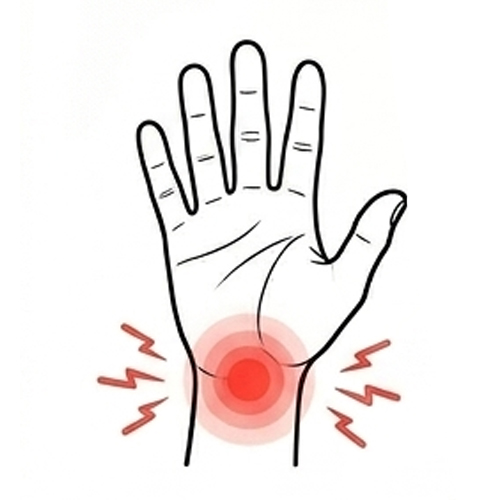
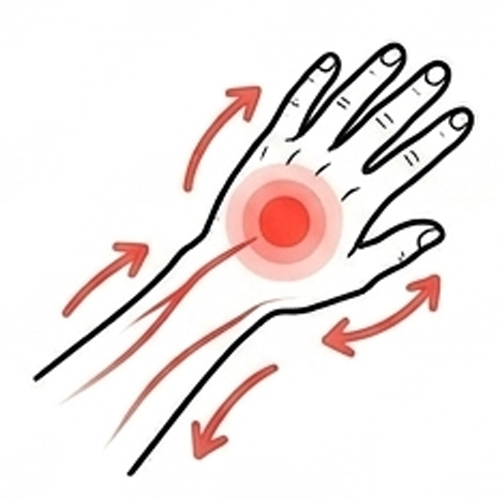
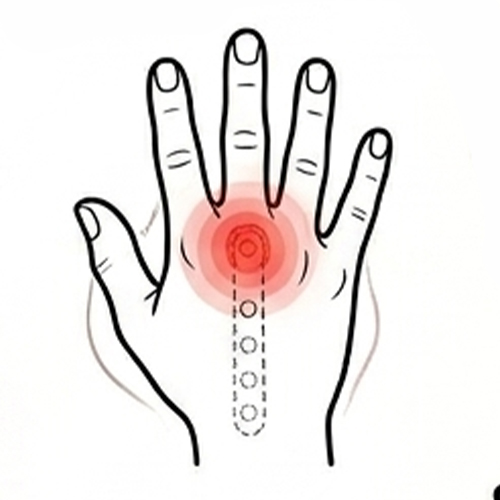
The most common reason lifters develop hand pain is straightforward mechanical overload. Tendons in the fingers and wrist are designed to handle stress, but they adapt slowly compared to muscles. If you increase your training volume or jump to a heavier weight too quickly, the tendons may not keep pace. This often presents as pain along the base of the fingers, the thenar eminence (the fleshy pad below your thumb), or the dorsal side of the wrist.
Strains and sprains account for nearly half of all weight training injuries, and the hand and wrist are particularly vulnerable because they are the contact point between your body and the load. Overuse is a significant factor: between 25% and 50% of sports-related hand and wrist injuries are attributed to repetitive stress rather than a single traumatic event.
Wrist Position and Alignment
A bent or hyperextended wrist during pressing movements (bench press, overhead press, push-ups) places enormous shear force on the small carpal bones and the tendons crossing the wrist joint. The most stable position for gripping is with the wrist straight or in slight extension, which keeps the load stacked over the forearm bones rather than straining soft tissue.
Rebecca Bossick (BSc (Hons) Physiotherapy), a physiotherapist at One Body LDN, puts it plainly: “Nine times out of ten, when a client comes in with hand pain from lifting, their wrist is collapsing into flexion or extension under load. Correcting that single fault often resolves the issue within a few sessions, without needing to stop training entirely.”
Nerve Compression
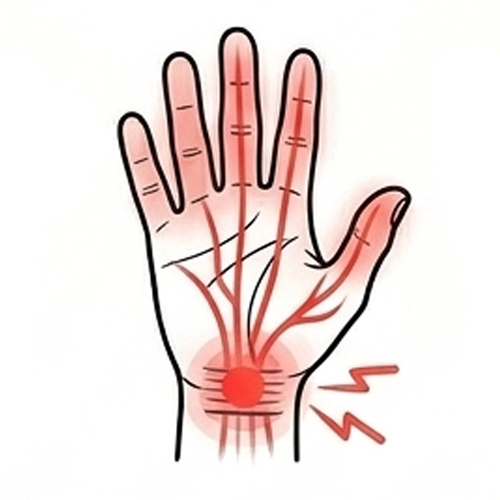
Gripping a thick or knurled bar tightly for extended sets can compress the ulnar or median nerves as they pass through the wrist. This may cause tingling, numbness, or a burning sensation in the ring and little fingers (ulnar nerve) or the thumb, index, and middle fingers (median nerve). Desk-bound professionals who already spend hours with their wrists in a flexed position over a keyboard are particularly susceptible, because the nerve may already be sensitised before they even pick up a weight.
Dropping Weights and Acute Trauma
It sounds obvious, but dropping weights is the most common cause of acute weightlifting injuries, accounting for 65.5% of cases. A barbell rolling out of a fatigued grip, a dumbbell slipping during a set, or catching a clean incorrectly can cause fractures, ligament tears, or deep bruising in the hand. These acute injuries are distinct from the gradual-onset pain most lifters experience, and they typically require immediate medical assessment.
Red Flags – When It’s More Than Just Weight Training
Most hand pain from lifting is mechanical and self-limiting. You tweak your grip, manage the load, and it settles. But certain symptoms suggest something that needs urgent attention, not just a programme adjustment.
Signs That Warrant Immediate Medical Review
- Visible deformity, swelling, or bruising after a specific incident (possible fracture or dislocation)
- Inability to move one or more fingers through their full range
- Numbness or tingling that persists for more than a few hours after training
- A popping or snapping sensation at the time of injury, followed by immediate weakness
- Pain that wakes you at night and is not relieved by any position
- Skin colour changes in the fingers (white, blue, or mottled), which may indicate a vascular issue
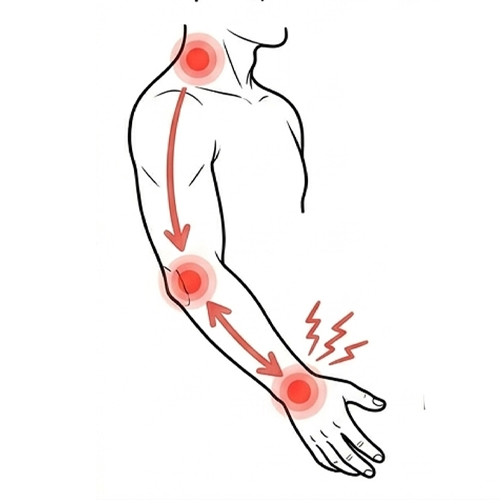
- Symptoms spreading up the forearm or into the elbow and shoulder
Conditions That Mimic Simple Overuse
Some conditions masquerade as training-related soreness but have different underlying causes. Carpal tunnel syndrome, De Quervain’s tenosynovitis, ganglion cysts, and early-stage rheumatoid arthritis can all present as hand pain that worsens with gripping. If your pain does not follow a clear pattern linked to specific exercises, or if it persists despite rest and technique changes, a clinical assessment is important.
The distinction between an immediate trigger (like a heavy deadlift) and a root cause (like accumulated wrist stiffness from years of desk work) matters. Treating only the trigger without addressing the underlying issue is why many lifters find themselves stuck in a cycle of pain, rest, return, and re-injury.
People over 55 face additional considerations: machine-based injuries are nearly twice as common in this age group (18.2%) compared to younger lifters (9.3%), possibly because machines fix the movement path and prevent the wrist from finding a comfortable position under load.
Morning vs Evening Pain
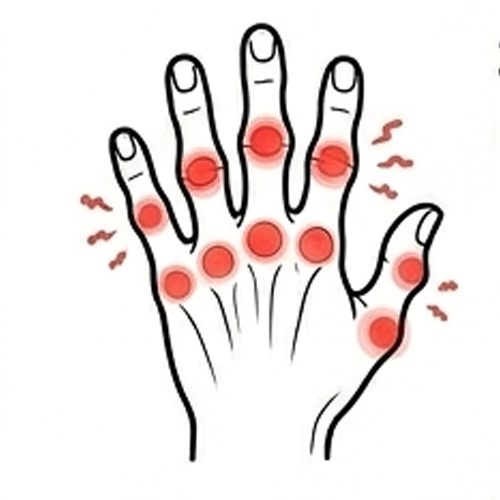
If your hand pain is worst first thing in the morning, with stiffness that takes more than 30 minutes to ease, this pattern can suggest an inflammatory or autoimmune component rather than pure mechanical overload. Pain that builds throughout the day and peaks after training is more consistent with tendon irritation or fatigue. Noting when your symptoms are worst helps any clinician you see narrow down the cause efficiently.
Self-Help Changes
The good news is that most lifting-related hand pain responds well to practical adjustments. Inadequate technique accounts for 31% of chronic weightlifting injuries, and a further 60% of all weightlifting injuries are linked to improper form. That means technique correction alone can address the majority of cases.
Fix Your Wrist Position First
For pressing movements, the bar or dumbbell should sit over the heel of your palm, with your wrist in a neutral or very slightly extended position. If you find the bar drifting toward your fingers, your wrist will buckle. A simple cue: imagine you are punching the ceiling during a bench press. That alignment keeps force travelling straight through the radius and ulna rather than through the small bones and ligaments of the wrist.
For pulling movements (deadlifts, rows, pull-ups), a hook grip or mixed grip can reduce the demand on the finger flexors, but both come with trade-offs. Hook grip compresses the thumb and takes weeks to feel comfortable. Mixed grip creates asymmetric loading. Experiment with both, and use lifting straps for high-rep accessory work to give your hands a break.
Manage Volume and Intensity Progressively
Tendons respond best to gradual, consistent loading. A general guideline: increase total weekly volume (sets x reps x weight) by no more than 10% per week. If you have taken time off, resist the temptation to jump back to your previous numbers. Your muscles may remember, but your tendons do not recover as quickly.
Practical Adjustments Worth Trying
- Switch from a straight barbell to an EZ-bar or neutral-grip handles for curls and presses: this reduces wrist pronation and supination stress.
- Use chalk or liquid grip instead of relying on a death grip to prevent the bar from slipping.
- Warm up your hands and wrists before lifting: wrist circles, finger extensions against a rubber band, and light grip work for 2 to 3 minutes.
- Take movement breaks every 30 to 45 minutes if you work at a desk: accumulated wrist flexion throughout the day compounds the stress you place on your hands during training.
- Consider thicker bar grips for some exercises: they distribute pressure across a wider area of the palm and may reduce localised hot spots.
Exercises That Commonly Aggravate Hand Pain
Front squats (wrist extension under heavy load), barbell curls with a straight bar, heavy farmer’s carries, and kipping pull-ups are frequent offenders. You do not necessarily need to eliminate these movements, but substituting a variation (goblet squat, dumbbell curl with supination, shorter carry distances) while symptoms settle is a reasonable strategy.
When to See a Physiotherapist for Lifting-Related Hand Pain
If your hand pain has not improved after two to three weeks of the self-help changes above, or if it is getting worse despite reducing load, a professional assessment is the logical next step. Waiting months while hoping it resolves on its own often turns a straightforward tendon issue into a chronic problem that takes much longer to rehabilitate.
What a Physiotherapy Assessment Involves
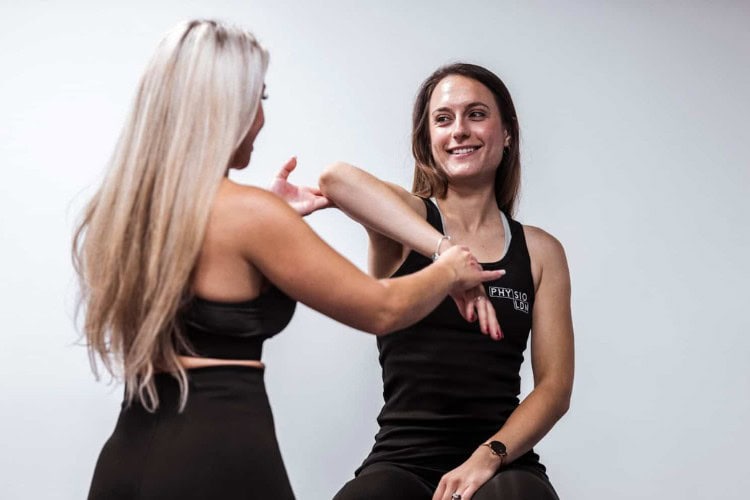
A good physiotherapist will assess not just your hand but your entire upper limb kinetic chain: shoulder stability, elbow mechanics, forearm rotation, and wrist alignment. They will ask about your training programme, your work setup, and your symptom pattern. Specific clinical tests (Finkelstein’s test for De Quervain’s, Phalen’s test for carpal tunnel, grip dynamometry) help pinpoint the structure involved.
At One Body LDN, the approach combines hands-on treatment (soft tissue work, joint mobilisation) with a structured rehabilitation programme that keeps you training as much as safely possible. The goal is never simply to rest until the pain goes: it is to identify what caused the problem, correct it, and build resilience so it does not return. Having helped over 35,000 clients address their pain, the clinic’s physiotherapists are well-versed in the specific demands that lifting places on the hand and wrist.
Do You Need Imaging?
In most cases, no. Routine imaging for hand pain without red flag symptoms rarely changes the treatment plan and can sometimes cause unnecessary worry. A clinical assessment is usually sufficient to guide management. If your physiotherapist suspects a fracture, significant ligament tear, or nerve entrapment that is not responding to conservative care, they will refer you for imaging at that point.
The Biopsychosocial Angle
Pain does not always equal damage. Stress, poor sleep, and anxiety about your injury can all amplify pain signals. High-pressure professionals who rely on training as their primary stress outlet often find that the frustration of being unable to lift actually worsens their symptoms. A physiotherapist who understands this relationship can help you manage the psychological component alongside the physical one, which research consistently shows improves outcomes.
When to Return to Lifting Weights After Hand Pain: Timelines
There is no single answer here, because recovery depends on the specific structure involved, the severity of the issue, and how quickly you addressed it. But rough timelines based on common presentations can help set expectations.
Typical Recovery Windows
| Condition | Estimated Return to Full Training |
|---|---|
| Grip overload / mild tendinopathy | 2 to 4 weeks with load modification |
| De Quervain’s tenosynovitis | 4 to 8 weeks with rehab |
| Wrist sprain (grade 1-2) | 3 to 6 weeks |
| Nerve compression (mild) | 2 to 6 weeks with ergonomic changes |
| Stress fracture | 6 to 12 weeks, guided by imaging |
| Post-surgical (e.g., carpal tunnel release) | 8 to 16 weeks, surgeon-guided |
These are approximations. The key principle is that pain-free daily activities come first, then pain-free light loading, then gradual return to training loads. Skipping stages is the fastest route to re-injury.
A Graded Return Framework
A phased approach works well for most lifters:
- Phase 1 (weeks 1 to 2): Pain-free range of motion exercises, isometric grip holds at low intensity, continued training of unaffected body parts.
- Phase 2 (weeks 2 to 4): Light isotonic loading with modified grip (thicker handles, straps, reduced range), building tolerance gradually.
- Phase 3 (weeks 4 to 8): Progressive return to normal grip and loading, monitoring symptoms within 24 hours of each session.
- Phase 4 (weeks 8 onward): Full training with ongoing attention to warm-up, wrist position, and volume management.
Your physiotherapist can adjust these phases based on your individual response. The exercises should not cause pain: aching wrists during a lift are a signal to stop and reassess, not to push harder.
Frequently Asked Questions
Can I still train upper body if my hand hurts? Yes, in most cases. You can modify exercises to reduce grip demand: use machines with padded handles, switch to movements that do not require a tight grip (like cable flyes with wrist cuffs), or focus on lower body and core training while your hand recovers. Complete rest is rarely necessary and can actually slow recovery by deconditiong the tissues you need to rehabilitate.
Should I wear wrist wraps to prevent hand pain? Wrist wraps can help by providing external support during heavy pressing movements, but they are a tool, not a fix. If you need wraps to train without pain, that is a sign something needs addressing. Use them strategically for heavy sets while working on the underlying issue.
Is hand pain from lifting a sign of arthritis? Not usually. Training-related hand pain in younger and middle-aged adults is far more likely to be tendon or ligament related. That said, if you have pain in multiple joints, morning stiffness lasting over 30 minutes, or a family history of inflammatory arthritis, it is worth mentioning to your GP or physiotherapist.
How do I know if I have carpal tunnel syndrome from lifting? Carpal tunnel typically causes numbness and tingling in the thumb, index, and middle fingers, often worse at night or when holding a phone or steering wheel. If your symptoms are limited to pain during gripping and resolve quickly after training, carpal tunnel is less likely. A physiotherapist can perform specific clinical tests to differentiate.
Do grip strengtheners help prevent hand pain? They can, if used correctly. Low-resistance grip trainers and finger extension bands help build tendon capacity over time. The key is progressive loading: start light and increase gradually. Crushing a heavy gripper when you already have irritated tendons will make things worse.
Is it normal for hands to hurt after deadlifts? Some palm soreness from bar contact is normal, especially if you are new to deadlifting or have increased volume. Calluses and mild skin tenderness are expected. Pain in the joints, tendons, or deep structures of the hand is not normal and should prompt a technique review.
Getting Back to Pain-Free Lifting
Hand pain from weight training is common, but it is also one of the most treatable issues a lifter can face. The vast majority of cases come down to grip mechanics, wrist alignment, or loading errors that respond well to straightforward corrections. Recognising the difference between normal training discomfort and a genuine injury is the first step. Acting on it promptly, rather than training through worsening symptoms for months, is the second.
If self-help changes are not resolving your symptoms within a few weeks, professional guidance can make the difference between a minor setback and a chronic problem. At One Body LDN, rated 4.9 on Google from over 6,500 reviews, the physiotherapy team specialises in getting lifters back to full training through hands-on treatment and tailored rehab programmes. All major private health insurers are accepted, and no GP referral is needed. You can book your appointment online in under 60 seconds.
References
- Preventing Hand and Wrist Injuries in the Gym – Hand and Wrist Institute
- Common Hand and Wrist Injuries Caused When Working Out – Florida Bone and Joint
- About Weightlifting and Hand Injuries – Fabio Tandioy
- Preventing Hand and Wrist Pain at the Gym – Bayside Hand Therapy
- Hand Weakness After a Workout – Everyday Health
- Wrist Pain from Weight Lifting – TX Orthopaedic