



Private hip physiotherapy in London usually costs somewhere between an assessment fee and a set of follow-up sessions, and the honest answer to “how much will it cost me” is: it depends on how many sessions your hip actually needs. That number is knowable, and this guide sets out what drives it.
Most people searching for a price want two things: the fee per session, and a realistic idea of how many sessions the whole thing will take. Generic “physio in London costs £40 to £120” pages answer the first and dodge the second. This one answers both, for hip pain specifically.
Key takeaways
- Private hip physiotherapy is priced per session, with a longer, higher-priced first assessment and shorter follow-ups after it
- The total cost depends on the number of sessions, not the headline fee, and the number of sessions depends on your hip
- Most hip problems need a short course rather than a single visit, and the count falls as your home programme takes over
- Self-pay and insurance work differently, and knowing which applies to you changes the maths
- No GP referral is needed for private hip physiotherapy in the UK
What you actually pay for: assessment, then follow-ups
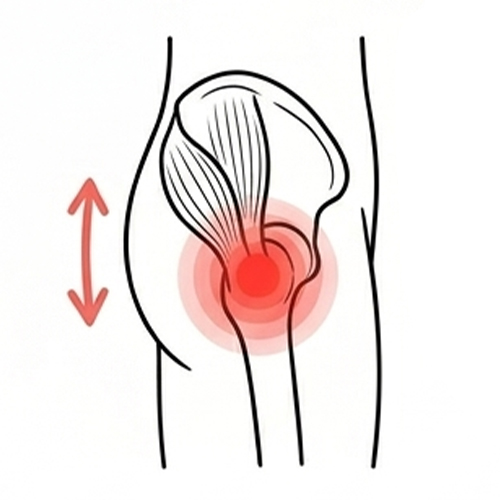
Private hip physiotherapy is charged per session, and the first session costs more than the rest because it does more.
The first appointment is an assessment. It is longer than a follow-up, and it carries the diagnostic work: your history, how the hip behaves, movement and strength testing, working out whether the pain is coming from the joint, the tendons, or the back. It ends with an explanation and a plan. That is why it is priced higher than the sessions that follow.
Follow-up sessions are shorter and cheaper. They deliver the treatment and progress the plan: hands-on work where it helps, and the strengthening that does the lasting work.
At One Body LDN
Our hip pain assessments are £75 for a 25-minute session or £125 for a 55-minute session, and follow-ups run from £49 to £109 depending on length. The full breakdown sits on our pricing page.
You can see the private hip physiotherapy pricing in London and book directly, with no GP referral needed.
Why session count decides the real cost
The headline fee tells you the price of one session. What you spend overall is that fee times the number of sessions, and the number of sessions is where the real cost sits.
This is the figure the generic cost pages leave out, and it is the one that actually decides your bill. Two people can pay the same per-session fee and spend very different totals, because one hip needed a short course and the other needed a longer one.
What moves the number up or down
The count is not random. It tracks a few things:
- How severe the problem is: A sharp, recent flare often settles faster than a hip that has been painful for months.
- How long it has been there: Long-standing hip pain has usually become as much about lost strength as the original problem, and rebuilding that takes a bit longer.
- What is actually driving it: A tendon or bursa problem, a joint problem, and referred pain from the back each behave differently. Our guide to hip pain and its causes explains how they are told apart.
- How well the home programme goes: This is the biggest single lever, and the one you control. The strengthening done between sessions is what lets the sessions space out, and then stop.
The practical shape most people see: sessions weekly at first, then fortnightly, then monthly as your own programme takes over the work. The frequency should fall as you improve. A plan that keeps you attending indefinitely without progress is worth questioning.
Self-pay versus insurance: the maths is different

Whether you self-pay or use private health insurance changes what you actually spend, and the two work in genuinely different ways.
If you self-pay, the cost is straightforward: the assessment fee plus your follow-ups. You book directly, you start immediately, and for an acute hip the earlier start genuinely helps.
If you use insurance, the picture changes. Insured patients usually need pre-authorisation before the first session, and the insurer often sets how many sessions they will fund before a review. That can cap your out-of-pocket cost, but it adds a step at the front. The process is simple once you know it, and our guide to how insurance-funded physiotherapy works walks through it.
One honest point people get wrong: NHS hip physiotherapy is free, and for many hip problems it is the right call. What you are buying privately is speed and continuity, faster access and the same clinician throughout. The trade-off is covered in our NHS versus private waiting times guide.
Getting the cost down without cutting corners
The cheapest hip physiotherapy is not the lowest per-session fee. It is the course that fixes the problem in the fewest sessions and stops it coming back.
A £49 session that leads nowhere costs more than a slightly higher fee that resolves the problem, because you pay for the sessions that follow. Two things genuinely reduce your total spend:
Start earlier: Hip problems caught early tend to need fewer sessions. Waiting lets the compensations set in, the limp, the lean, the shrinking walks, and those take longer to unwind.
Do the home programme: It is free, and it is the single biggest determinant of how fast you finish. The people who space their sessions out quickest are the ones who did the work between them.
Where a specific condition needs its own pathway, such as hip bursitis treatment in London, the assessment tells you what you are dealing with before you commit to a course, so you are not paying to find out as you go.
When to book a hip physiotherapy assessment
Book an assessment if your hip pain has lasted beyond two to three weeks, keeps returning, or is affecting your sleep, walking or training.
The assessment is where the cost question actually gets answered. Until a clinician has seen the hip, any session count is a guess. After it, you have a realistic plan and a realistic total, and you can decide from there.
Book our hip pain assessment cost directly, no GP referral needed, with same-week availability across our London clinics.
Common questions about hip physiotherapy cost
How much does private hip physiotherapy cost in London?
It is priced per session: a higher first-assessment fee, then lower follow-up fees. At One Body LDN, hip assessments are £75 or £125 by length, with follow-ups from £49 to £109. Your total depends on how many sessions your hip needs.
How many hip physiotherapy sessions will I need?
Most hip problems need a short course rather than one visit, and the exact number depends on the severity, how long it has lasted, the cause, and how the home programme goes. Your physiotherapist gives you a realistic estimate at the first assessment, and the frequency falls as you improve.
Is private hip physiotherapy worth it over the NHS?
Privately you are paying for speed and continuity: faster access and the same clinician throughout. NHS hip physiotherapy is free and effective, but waits are longer. For an acute hip, the earlier private start often means fewer sessions overall.
Does insurance cover hip physiotherapy?
Often, yes, but it usually needs pre-authorisation first, and the insurer may set a session limit before review. Self-pay skips that step and starts immediately. Which is cheaper for you depends on your policy and your excess.
Do I need a GP referral to book?
No. Private hip physiotherapy runs on direct access across the UK, so you book directly. Many NHS areas also allow self-referral.
